


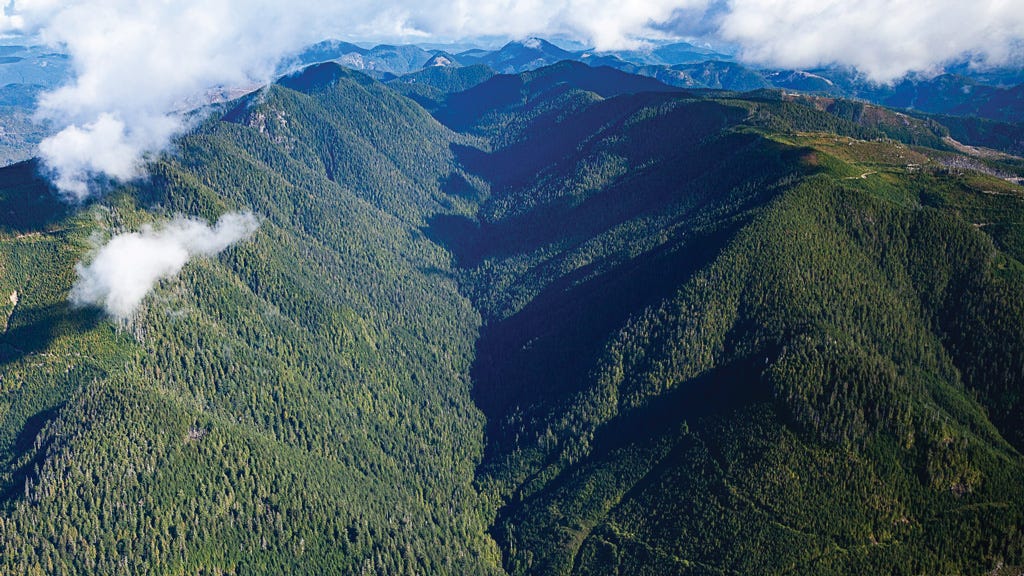
Trekking into the heart of one of the last intact temperate ancient rainforest watersheds on Earth
This is a call to rally allies and a call for help in my mission to bear witness to and take pictures in the heart of the Ada'itsx (aka Fairy Creek) Rainforest to protect it for future generations

Hello everyone!
First of all, to those of you that are paid subscribers to my newsletter, I just want to thank you from the bottom of my heart for continuing to make it possible for me to do this work! Without your generous donations, I would not be able to devote time to research, seed saving, refugia and community food forest designs as well as protecting endangered forest habitats.
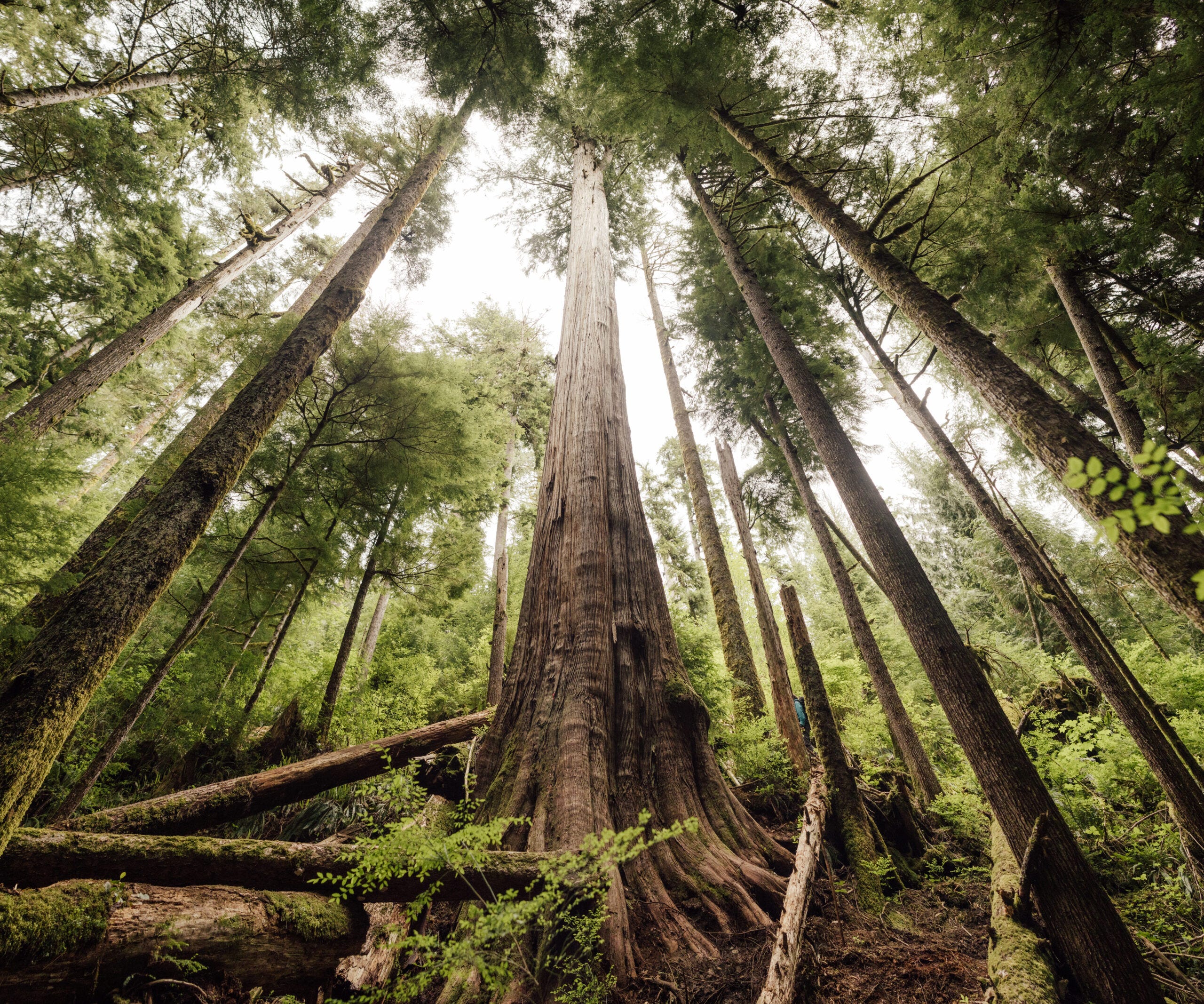
This summer I am planning to hike into the heart of one of the last few intact old growth (primary) ancient temperate rainforest watersheds on the west coast of Turtle Island to bear witness and capture images of the ancient beings that dwell there (so that what ever happens, future generations do not forget that beings of immense grandeur, wisdom, magnanimity, beauty and grace once covered the face of the land now called “BC, Canada”).
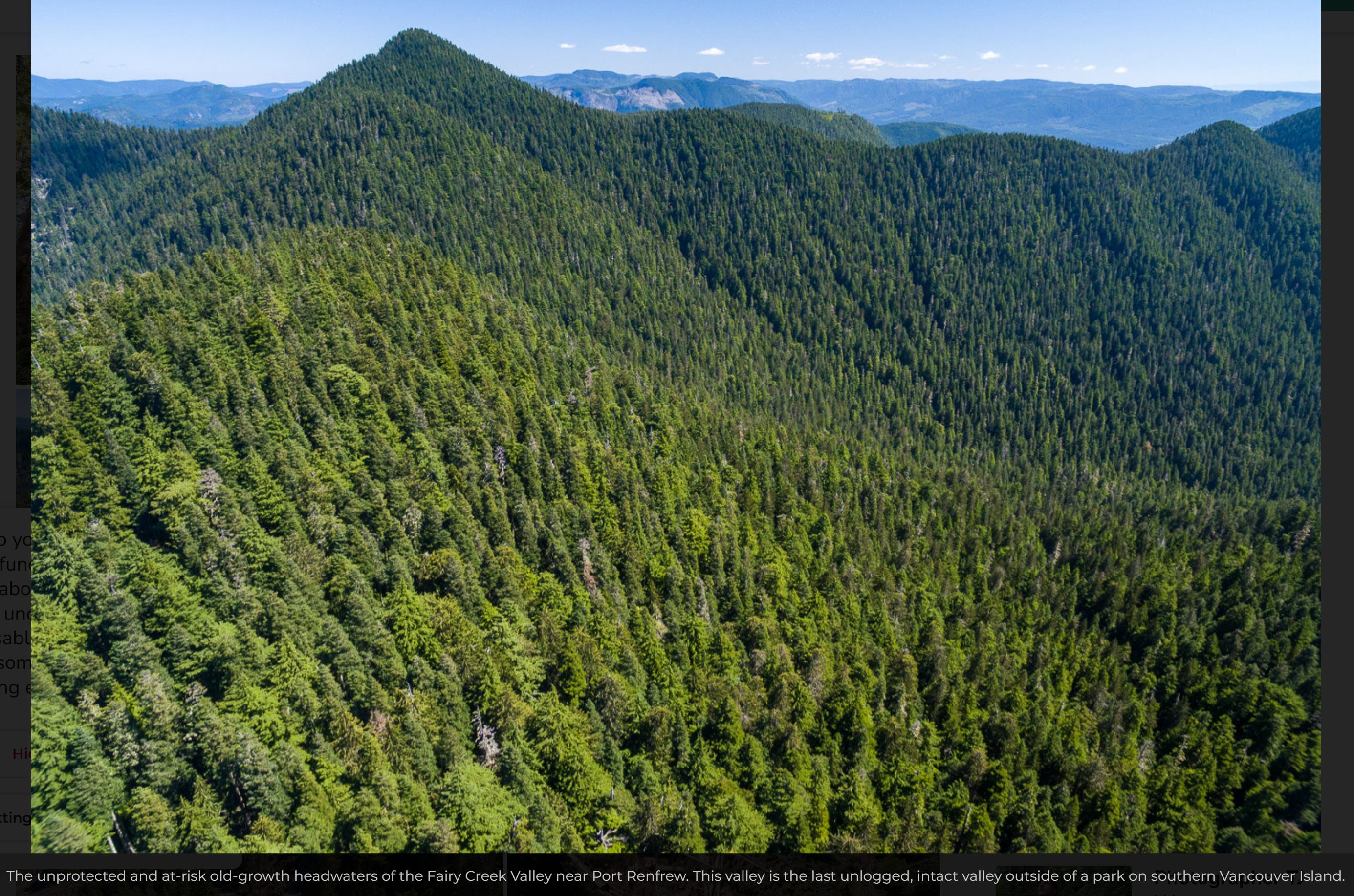
I have decided to put several projects on hold locally, I have reached out to Pacheedaht First Nation elders for their blessing in entering the sacred Ada'itsx (aka Fairy Creek) Rainforest watershed (and having received their blessing) I am now in the planning stages for an expedition in August when I will trek into the heart of the Fairy Creek valley to witness the ancient beings that dwell there and to capture images to raise awareness for the importance of protecting rare habitat such as Fairy Creek.
I am posting this to reach out to all of you that subscribe to this newsletter in asking for your help with the following:
1. To ask if any of you that live on the Island (Vancouver Island) or out west nearby know of someone you trust that has experience trekking in that valley in particular that would be interested in being hired as a guide.
2. I am reaching out to those of you that can spare a few fiat currency notes to help me cover expenses for the trip to please become a paid subscriber to this newsletter (or to donate via a one time donation via my website) to help me make the trip possible.
3. Issuing a call to please help me get the word out into your circles via sharing this post far and wide.
For some background on what I am talking about and for those that are not aware of what is at stake here:
The Fairy Creek watershed is an extremely rare forest habitat (that by some miracle had escaped the ravenous gluttony of the corporate logging industry which has decimated over 97% of the primary old growth on the Island, up until 2020).
This brief video below offers some perspective on what is at stake.
A short overview for those that missed witnessing the events at Fairy Creek from 2020-2025:
In August of 2020, land defenders and a Pacheedaht Elder, Bill Jones, caught word that Teal Jones would begin building roads and logging ancient forests in the pristine Ada’itsx Fairy Creek watershed in a remote part of southwest Vancouver Island, where some trees are up to a thousand years old. Galvanized by the dire threats these endangered ecosystems face, activists began the Ada’itsx Fairy Creek Blockades, calling themselves the Rainforest Flying Squad.
Indigenous Peoples have stewarded ancient forests since time immemorial; their culture, language, and identity are inextricably bound to these ancient giants. As Elder Bill Jones told the Watershed Sentinel, “The fact that they’re the last of the old growth – all the last of our spiritual freedom that we have in this world.”
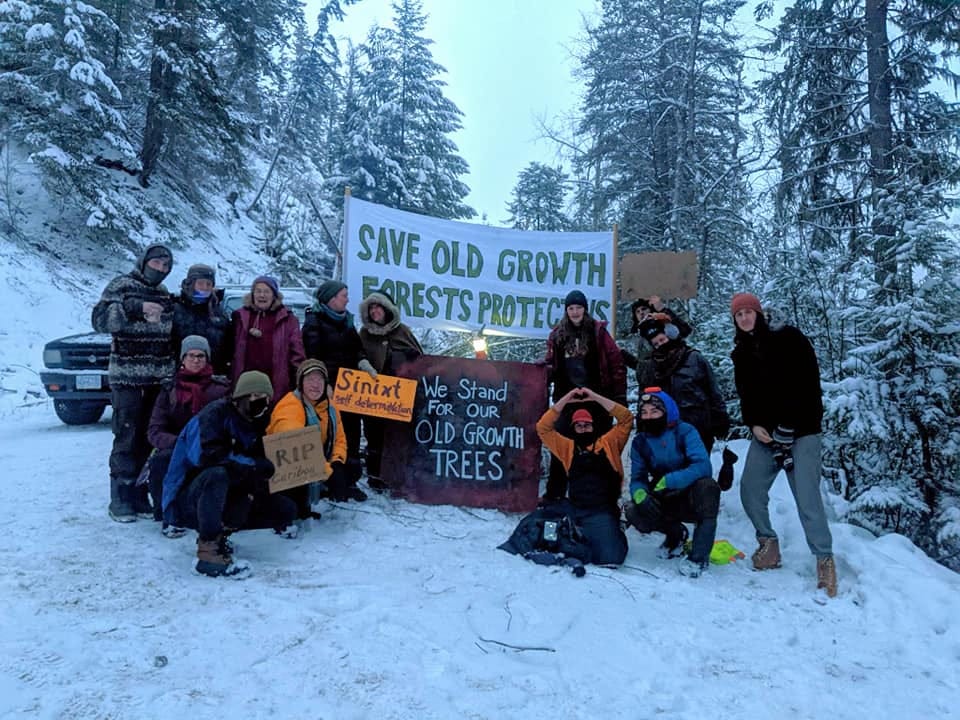
The forest protectors held the line for over a year, in what became the largest civil disobedience movement in Canadian history.
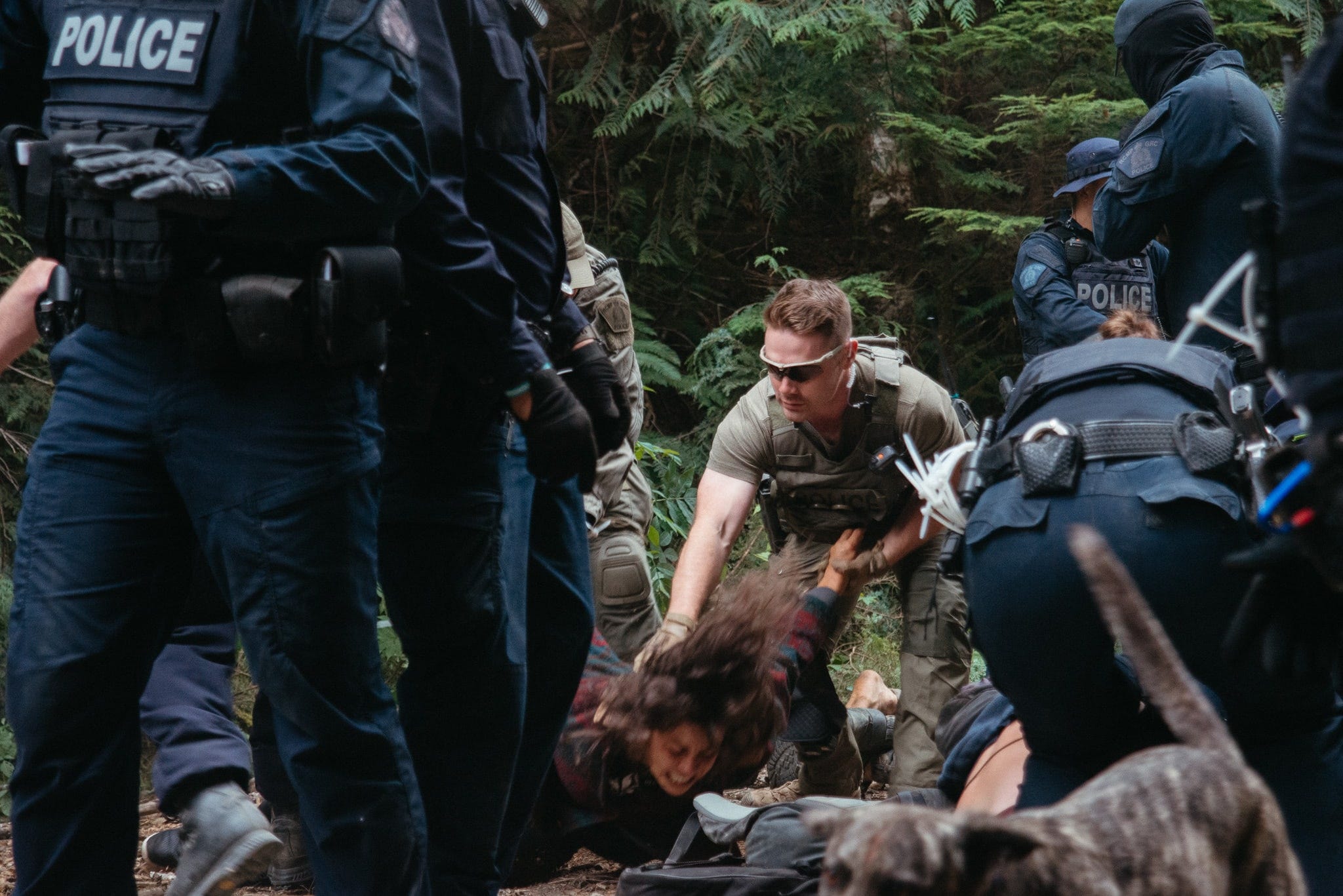
Fairy Creek land defenders continued, for months at a time (in harsh weather, being beaten, mased and harassed by thugs with badges) to hold off logging operations that would finish off these ancient trees that predate colonialism, statism and capitalism.
After many arrests of brave forest protectors, after many murdered ancient elders (some over 900 years old) and after much police brutality (with RCMP acting as corporate mercenaries) they finally got a judge to do an injunction (an order to temporarily stop the logging of the last ancient trees on Vancouver island) putting the profiteering on hold.

Our government in Canada is always saying how "green" and "sustainable" they are, meanwhile, that same government simultaneously supports, subsidizes and profits from clearcut logging of primary forests and endangered old growth stands in Canada.
The forestry regime in Canada follows a fundamentally colonial model, in which forest lands are treated as terra nullius. The assumption is that nature is capital, a resource to be managed and extracted from for society’s perpetual economic benefit. This idea is implicit in Canada’s forestry policy and history, most notably in the policy of “sustained yield”. Sustained yield is based on the concept that old-growth forests are an asset to be converted into tree farm plantations, managed by ‘science’, to yield timber resources in perpetuity. It leads to forest management regimes that involve stripping forests bare, killing their many inhabitants (Ecocide), then replacing them with monocrop tree farms devoid of “competing” vegetation and unable to support the wildlife populations that once called those diverse habitats home. This intensive tree farming system, designed to maximize timber yield, removes the very biodiversity that makes the forests so rich in the first place.
Clearcut logging is also an exploitative activity that (in stark contrast to the propaganda you may hear on the TV or from ignorant and perhaps corrupt people like this lady) actually increases the risk of extreme forest fires.
The people shown above and below with militarized equipment, armed with the weapons of war and the tools for silencing and crushing dissent (paid for by our tax dollars) are the hired mercenaries of a corporate oligarchy that is hell bent on transforming the living world into dead products, for profit.
Do not allow their badges and reassuring uniforms to confuse you, make no mistake, these are the foot soldiers and enforcement arm in a corporate war on nature (paid for by Canadian Tax Dollars).
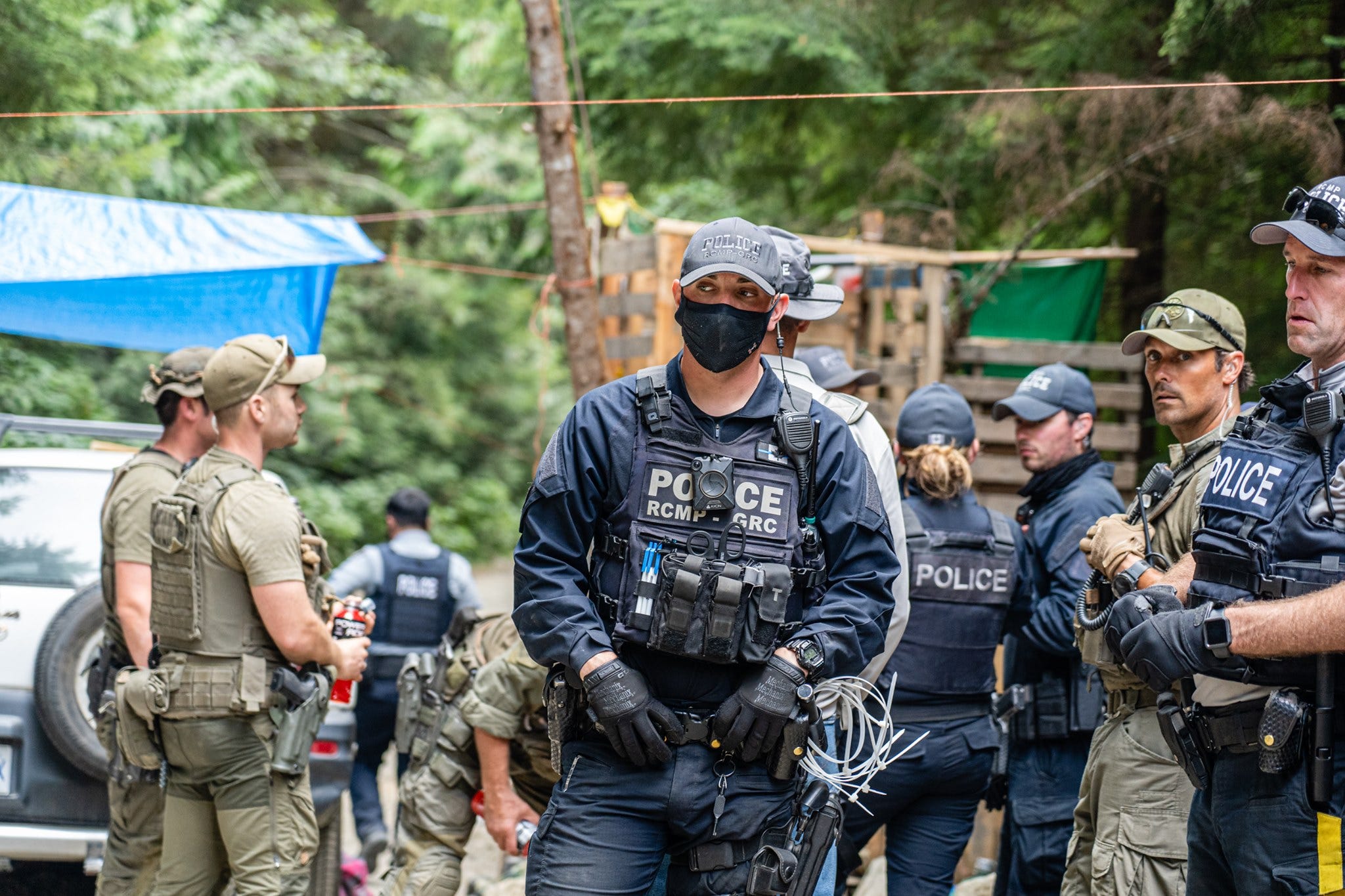
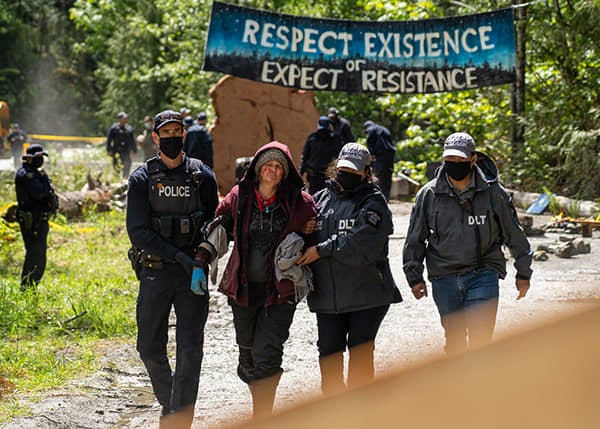
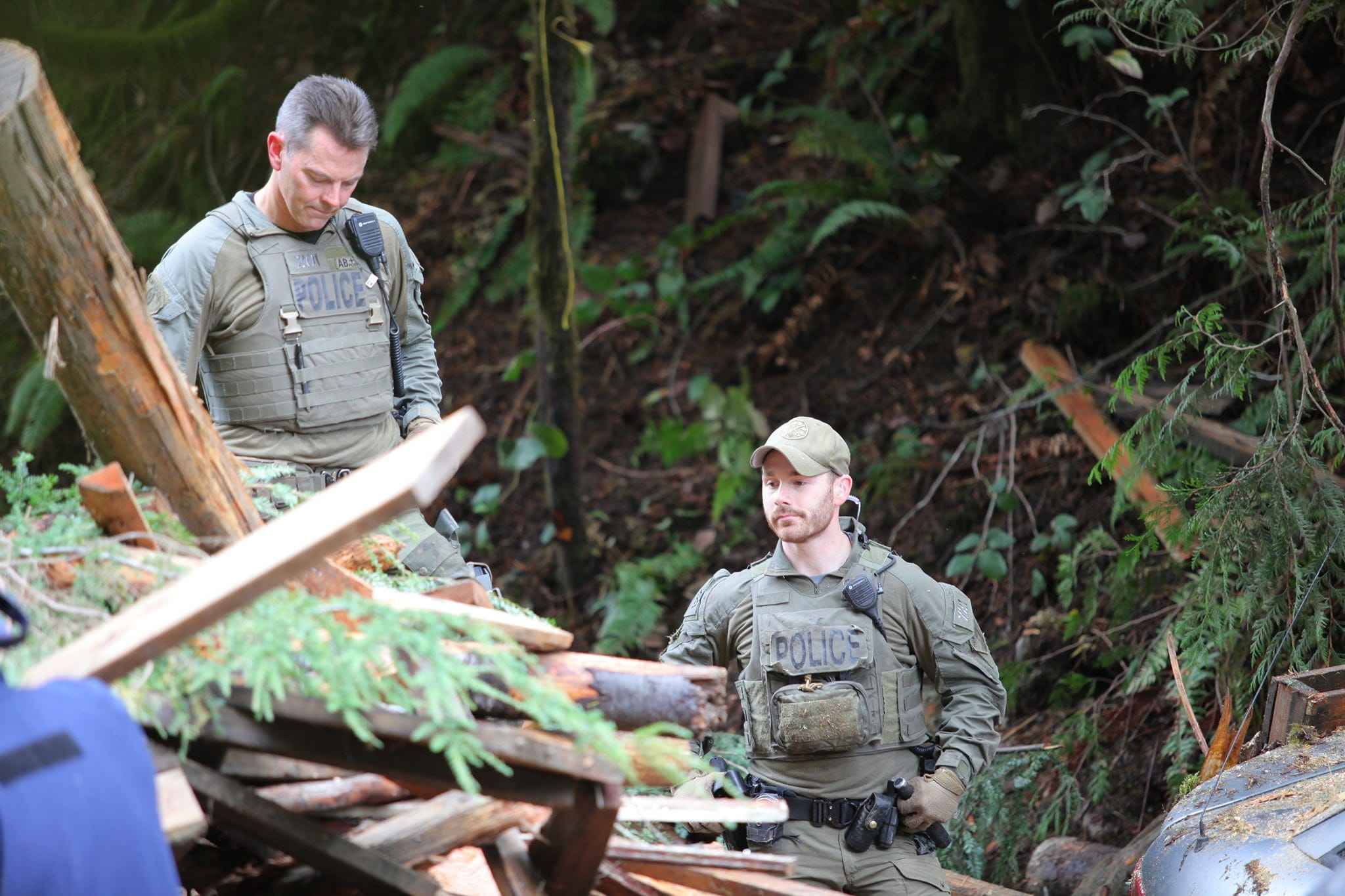
These police officers that are involved in facilitating the destruction of the last remaining ancient temperate rainforest stands are complicit in acts of ecocide. Some may say “they are just following orders” or “just trying to make a living” but it always comes down to a choice. They chose to show up for that assignment just as the police chose to show up in Ottawa to serve as the enforcement arm for Big Pharma and just as the bankers chose to comply with the edicts of our corrupt government and freeze people’s bank accounts for peacefully protesting. The same goes for those that show up in an attempt to facilitate the cutting down these last remaining sections of old growth rainforest in BC.
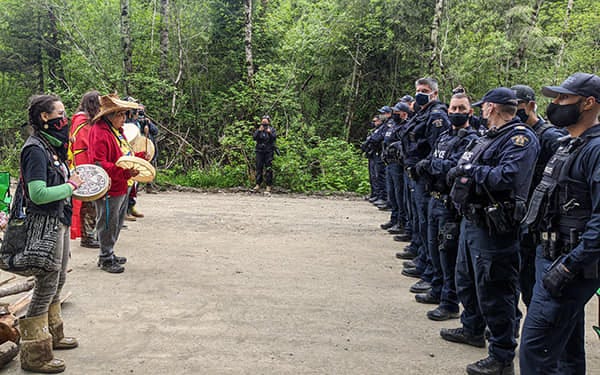
“The C-IRG: the resource extraction industry’s best ally” : https://briarpatchmagazine.com/articles/view/the-c-irg-the-resource-extraction-industrys-best-ally
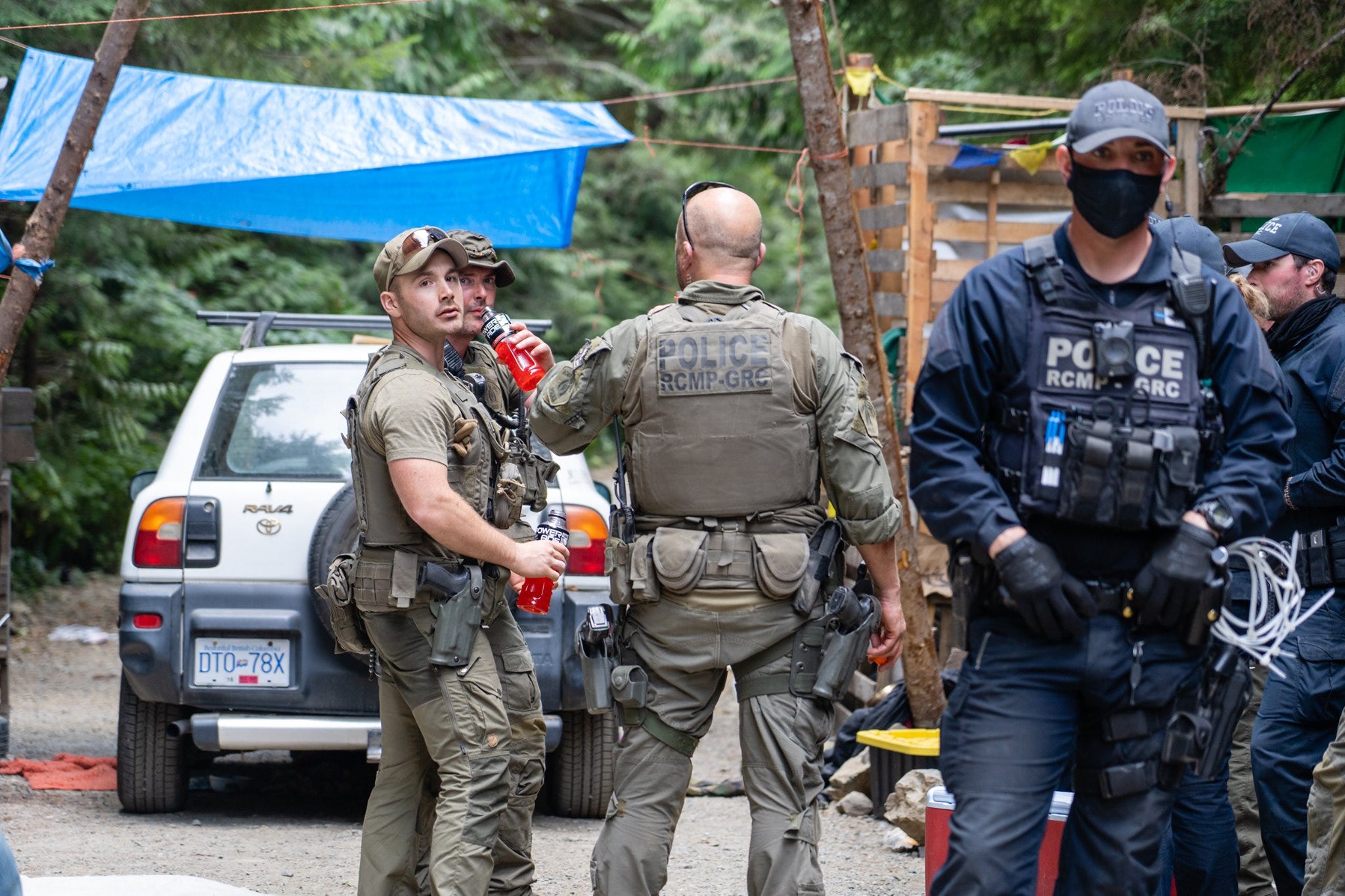
The horrifying violence the C-IRG uses to remove forest defenders from places like Fairy Creek shows that they are nothing more than hired thugs for corporate extractive industries. Briarpatch investigators interviewed C-IRG commander John Brewer, confirming that he ordered officers to remove their name tags and police badges – making them nearly impossible to identify and hold accountable for their actions.
This same tactic was used in Ottawa when Canadian police from various regions decided they would follow orders to serve as the enforcement arm for Big Pharma.
Documents obtained by Wet’suwet’en land defenders through an access-to-information request, highlighted that over $18 million in public money has been spent between 2018 and 2021 to enforce Coastal GasLink’s injunction against the land defenders on Wet’suwet’en territory.
I explored the abhorrent abuses of the RCMP on the Wet’suwet’en people in this post.
When we let the governments we fund use our money to find the destruction of the last few old growth forests on Turtle Island, we become complicit in the starvation of future generations. Starvation of the soul first and foremost, leaving a landscape devoid of the ancient cathedrals that the Creator intended to provide nourishment and spiritual enrichment for our souls. Secondly through the crippling impacts on the ecology we depend on to nourish our bodies.
Most people do not realize how interconnected the forests and the salmon are, and it goes both ways.
When you have a healthy population of old growth trees inland producing copious amounts of leaves that decompose and then carry essential minerals through the streams, rivers and into the ocean to fertilize the plankton, shrimp and you get a healthy population of salmon.
Clearcut the old growth oak, hickory and maple forests for profit and out of arrogance/greed (as humans have here in Ontario and much of south-eastern Canada as well as in places like Ireland and England/Scotland) and the salmon populations collapse.
And then without the salmon carrying those ocean minerals far inland in their bones (being gifted to the forests by the bears and eagles that drag them out of the river and deposit them to enrich the soil) the trees are not capable of reaching the same height, size and age anymore. The few forests that are left and those “parks” that plant trees, grow pathetic shrunken versions of their glorious ancestors, and generations of humans suffer from the shifting baseline syndrome (never getting to know what a true forest is, looking at their dwarf human-made (salmon nourishment deprived) mini-forests as though those are the real deal).
This distorts human minds and starves human souls of the nourishment the Creator intended for us.
———————————
There is an old Japanese proverb that states
‘ If you want to catch a fish, plant a tree’
Well, considering what we know about how salmon bones and flesh enrich forest health, it may also be true to say:
Salmon are keystone species in Building ancient and resilient Forests. Rich in nitrogen/phosphorus/calcium from the sea, the rotting salmon flesh fertilizes forest growth. Salmon promote forest health. Giant trees require nitrogen and minerals to grow massive canopies that shade the streams and absorb excessive rainfall.
Cutting down the ancient trees cripples the salmon habitat, resulting plummeting salmon runs. Plummeting salmon runs cripples the forest habitat inland from being able to reach its true potential any longer, and a negative feedback loop begins, leading to a potential future with weak, forest fire prone forests, rivers devoid of fish and erratic weather.
This is 𝗱𝗲𝗮𝘁𝗵 𝗯𝘆 𝗮 𝘁𝗵𝗼𝘂𝘀𝗮𝗻𝗱 𝗰𝗹𝗲𝗮𝗿𝗰𝘂𝘁𝘀 and we are actively funding it with our tax dollars.
“Imagine a river so thick with salmon that the water itself seems to shimmer, the silver bodies of fish slicing through the current in a desperate, timeless migration. Eagles scream overhead, diving to snatch writhing bodies from the torrent. Bears stand knee-deep in the rush, tearing open bellies, scattering pink flesh across the banks. The forest drinks this feast—leaves stretching higher, trees growing thicker, roots sinking deeper. In death, the salmon become the forest, their ocean-born bodies dissolving into soil, nourishing the roots of cedar and spruce.
This was once the story of the Pacific Northwest. This was life—a system that knew its parts, that pulsed with a rhythm of birth, death, and rebirth. But that world is gone. Now, the rivers are silent. The silver rush has faded to a few struggling fish, battered against the concrete faces of dams, torn by turbines, poisoned by runoff. The eagles starve. The bears search in vain. The forest grows thin and weak.
The collapse of the salmon is not just an ecological tragedy—it is a message, written in the blood of a dying species. It is a reminder of something our civilization has forgotten: that life is a system of relationships, not a stockpile of resources. The salmon are not just fish. They are trees. They are eagles. They are soil. They are us.
But we, the self-proclaimed apex of life on Earth, do not see this. We see only objects, commodities, numbers on a balance sheet. And so we take without giving. We dam the rivers to light our cities, we clearcut the forests for paper and profit, we poison the waters for the convenience of chemicals and crops. And as the rivers die, as the forests wither, we tell ourselves that we are "developing" the world.
In our madness, we have forgotten a truth older than our cities, older than our religions, older than our species itself: A system cannot survive when it destroys its own foundations. The death of the salmon is the death of the rivers. The death of the rivers is the death of the forests. The death of the forests is the death of us all.”
-
(from A River Starves Through It: Salmon, Forests, and the Collapse of Life)
(For more on the connection between forests and salmon, read this.)
Clear-cut logging of old-growth hardwood forests here in Ontario, and in places like England, Scotland, Ireland, Japan and elsewhere has decimated the once bountiful salmon populations that nourished the peoples of those lands. Combine that with the extermination of all bears and the poisoning of eagles with DDT and other poisons from big AG and the mineral cycle from the ocean to this land has been severed (and now trees typically grow to less than half of their original size).
Clear-cut logging of old-growth hardwood forests on the West Coast also severely impacts salmon habitat by increasing water temperatures, sediment, and erosion, which harms fish health and reduce spawning success. Additionally, clearcutting practices alter stream flow and the structure of the environment, further impacting salmon populations. As the salmon run becomes crippled, the nutrient cycle that Creator intended to bring the ocean minerals inland to nourish the trees is severed, and the Douglas firs that once grew to be mighty thousand year old plus pillars of life, become no longer capable of achieving their true potential.
Unprotected old-growth forests are at risk all over B.C.. As stated above, less than two per cent of the province’s biggest, most ecologically important old-growth remains.
For the full story on the Fairy Creek protests, forest protectors and the nefarious behavior of the corporate mercenaries mentioned above with badges read this:
Death By A Thousand Clearcuts

“Those who contemplate the beauty of the earth find reserves of strength that will endure as long as life lasts. There is something infinitely healing in the repeated refrains of nature — the assurance that dawn comes after nig…
Fast forward to 2025
The deferral that legally barred the logging corporations from clearcutting the last of the ancient intact watersheds of the temperate rainforest of the Pacific Northwest (at Fairy Creek) was set to expire, but thanks to First Nations land defenders and non-First nation forest defending allies standing their ground and raising awareness the government out west was forced to extend the deferral again (under public pressure which highlighted how hypocritical and psychotic it would have been for them to continue colonial pillaging and profit from destroying endangered forest habitat while claiming to be about “truth and reconciliation” and “sustainability”). The provincial government's announcement (two days ago) granted a logging deferral extension to Sept. 30, 2026.
Thus, this endeavor to protect the last of the ancient forest watersheds of the temperate rainforests of BC is not over, and the vultures of colonial industrial exploitation will be circling again in about a year from now.
I want to do what I can to shine a light on the importance of protecting this extremely rare primary temperate rainforest habitat and so I will be journeying hike into this forest and take pictures to share with all of you this summer.
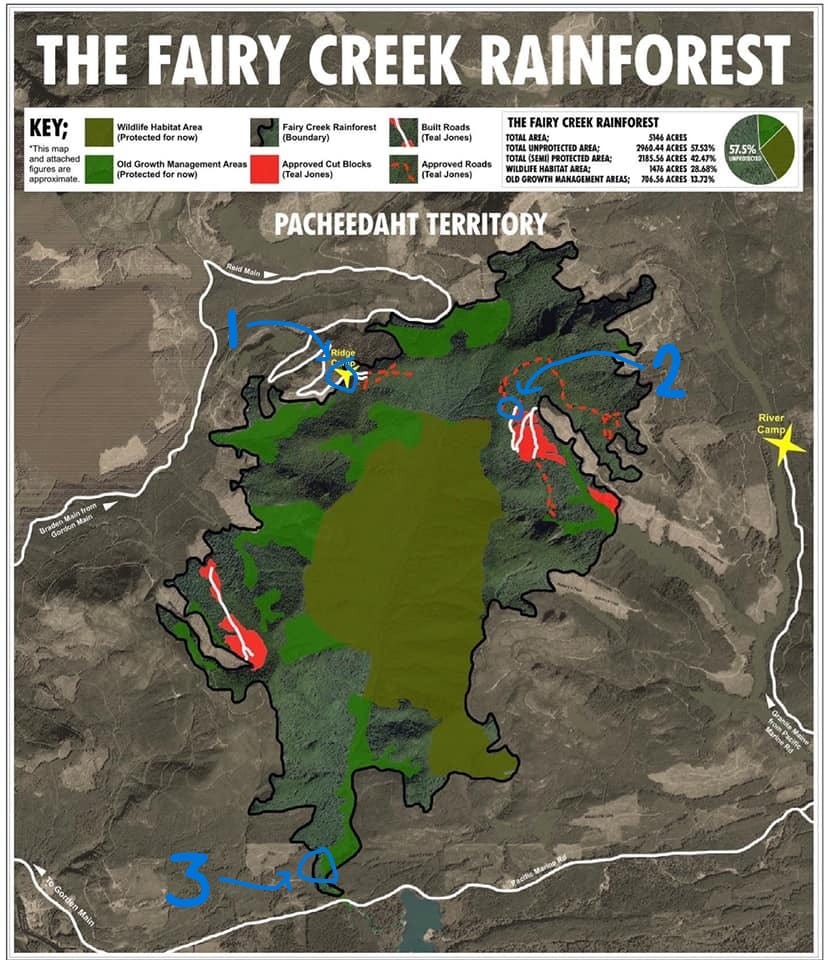
My potential points of entry into the watershed are the two logging roads that attempted to breach the valley for clearcutting (but were blocked by courageous forest defenders) or to trek in from the bottom on the valley following the creek.
Map shown (potential access points circled and numbered in blue) below:
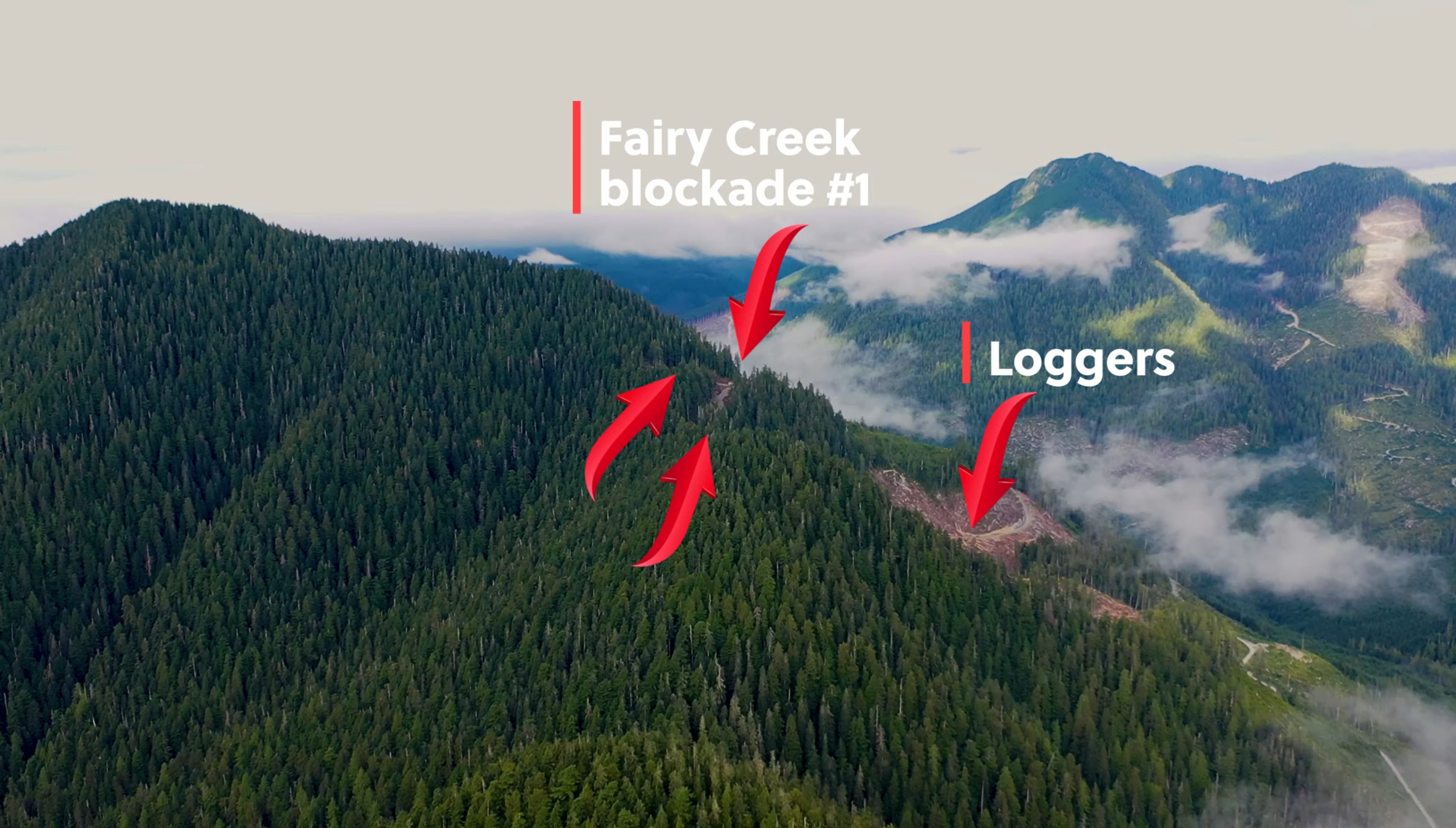
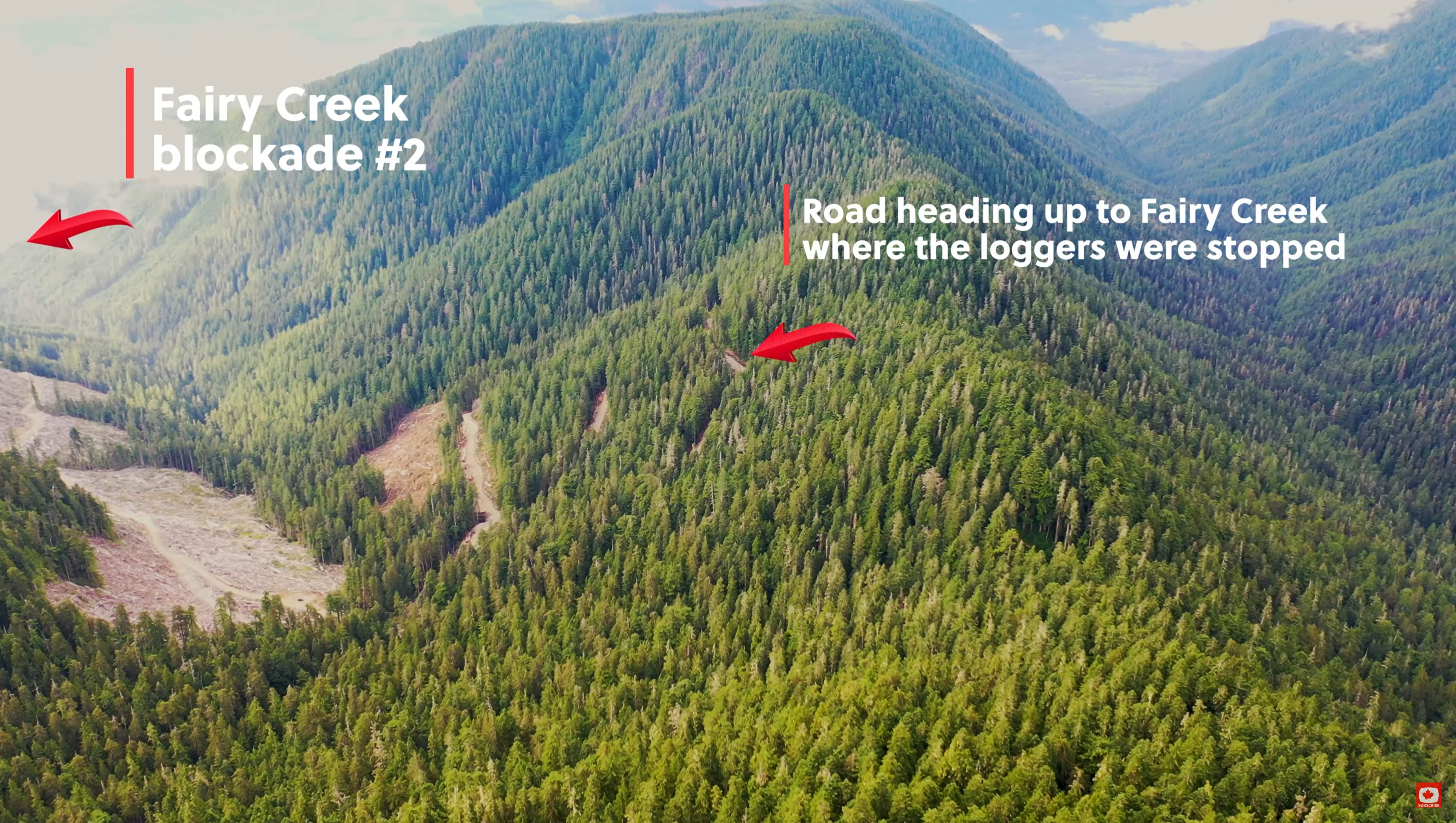
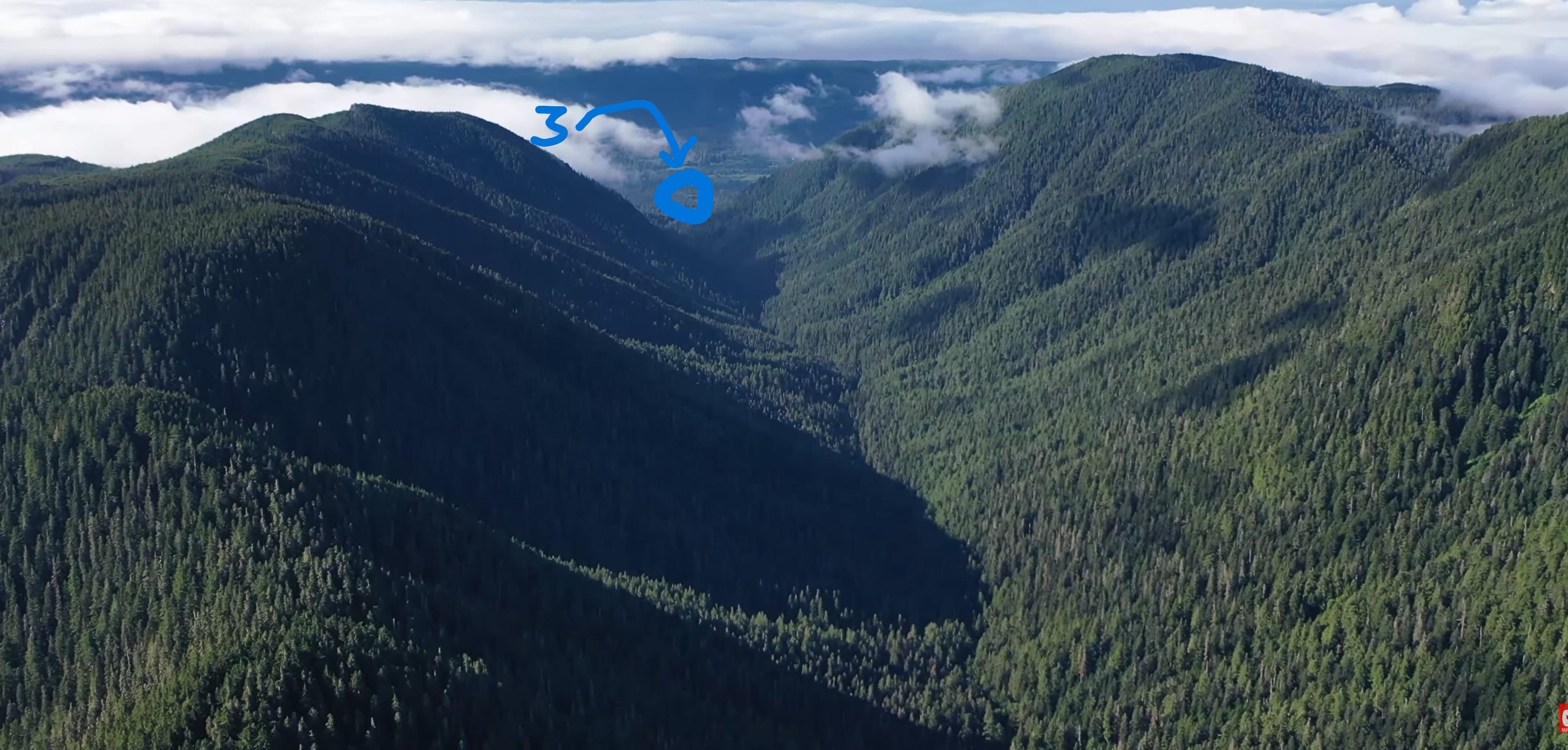
I am grateful I have permission from the First Nation land stewards of that region to enter the valley but I would also prefer to hire a guide. If you know someone that would be able to provide that service please email me at recipesforreciprocity@proton.me or comment below.
Driving up the logging roads to either point 1 or 2 would enable more swift access to the heart of the valley but it would require 4x4 vehicle access and experience.
Access point number 3 (hiking in along the creek) will be the more arduous and time consuming (as the valley bottom is a steep canyon/ravine in areas and the many fallen logs make for lots of climbing to gain a little bit of distance).
I am sure I can just use the topography and sound of the water to guide me, but being my first time in that valley it would take me longer to navigate the terrain than if I were to go in there with someone that knows the land. Any help in that regard would be greatly appreciated.
I`ll post an update once I get back and share some pics with you all.
I will be preparing for this expedition with much of my spare time in the month ahead so my posts on here may be minimal. Thank you in advance to all my subscribers for your patience and understanding in that regard. Your support allows me to continue doing what I do.
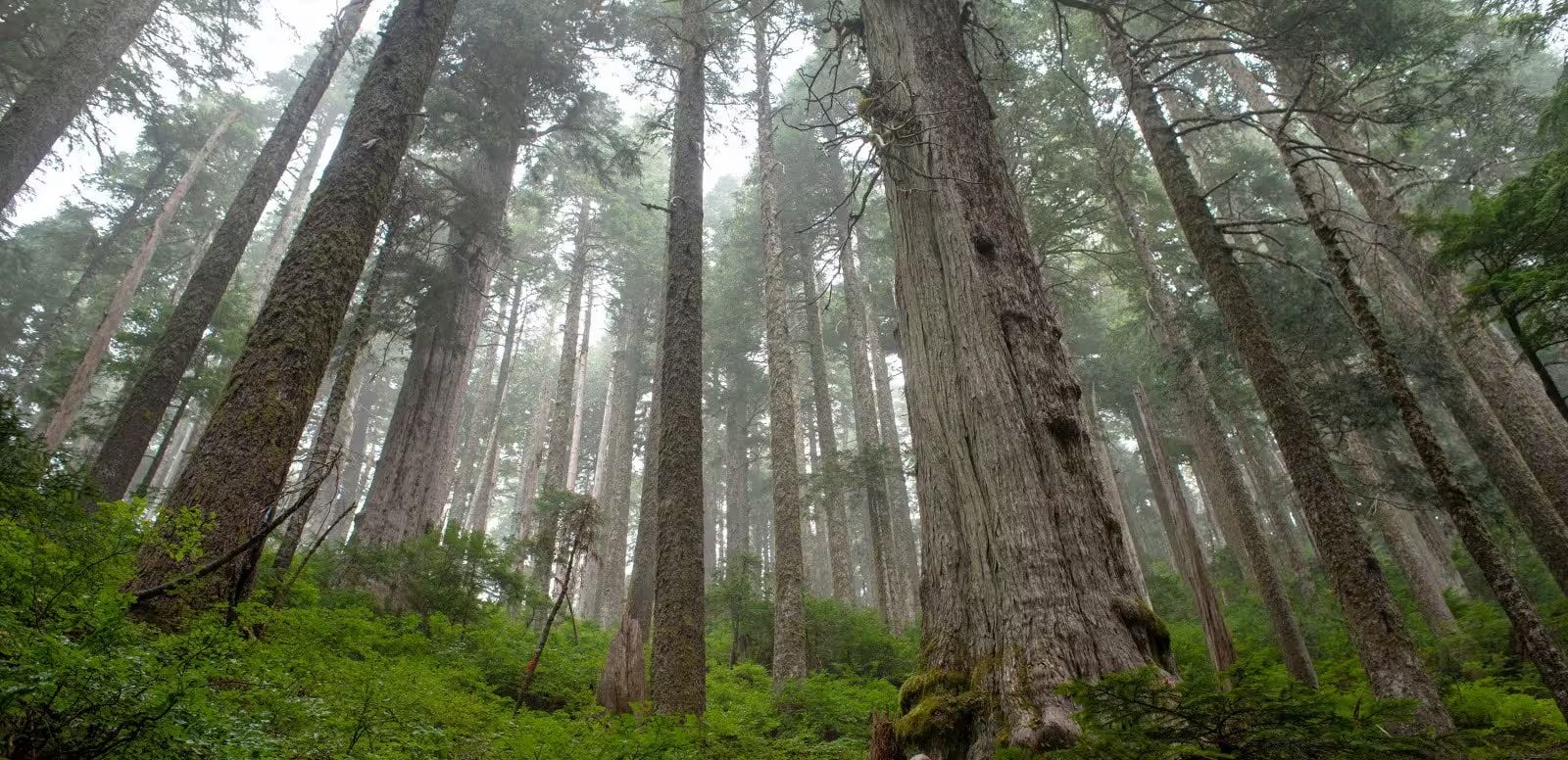
The Fairy Creek watershed is one of the last living memories of the living Planet Earth's expression of the beauty, diversity, wisdom, medicine for the spirit and biodiversity that arises in the form of an ancient temperate rainforest.
This place is one of the original Cathedrals designed by the Creator of all things, and is a place intended to hold ancient knowing, resilience and connect out ancient past, ancestors and the spirit of the land to the distant future and the 7th generation that comes after us.
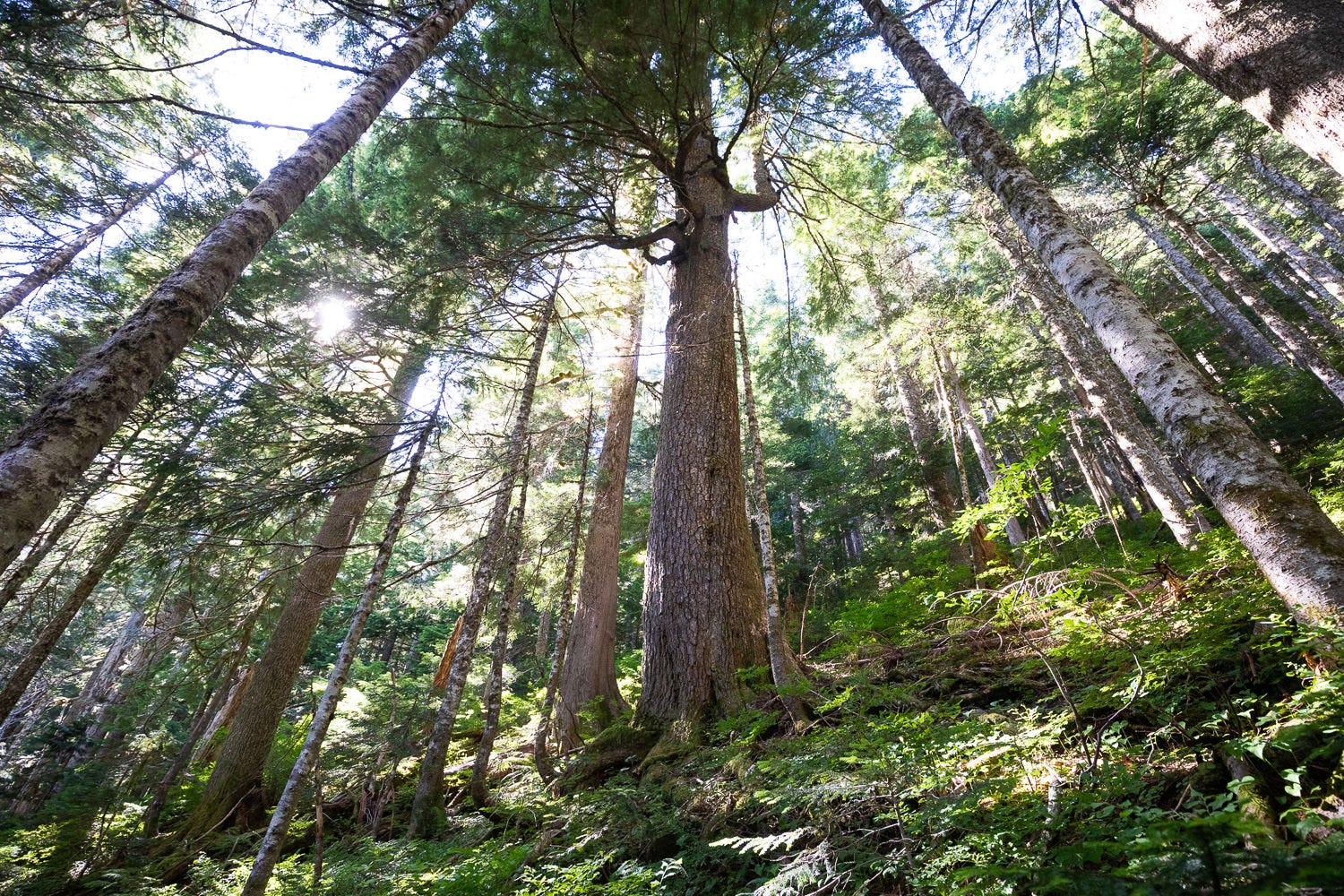
As this sacred valley is still under threat by corporate profiteering and corrupt statist government complicity, I feel moved to drop what I am doing, stand up and speak for the trees to help our fellow human beings understand the importance of protecting this ecosystem scale Noa's Ark that is the Fairy Creek Watershed.
The ancient rooted beings of the forest need people like you to share this and speak up.
Thank you for your help in this endeavor.
I love this more than I can say, Gavin! I can’t wait to hear all about it! 🌲🌲💚
I wonder how much logging like this could be related to Canada’s struggles with wildfires. If they’re planting black spruce when they take these down, as I heard was happening in other Canadian forests, that’s an extremely flammable species. Best of luck on your journey and with this endeavor!