

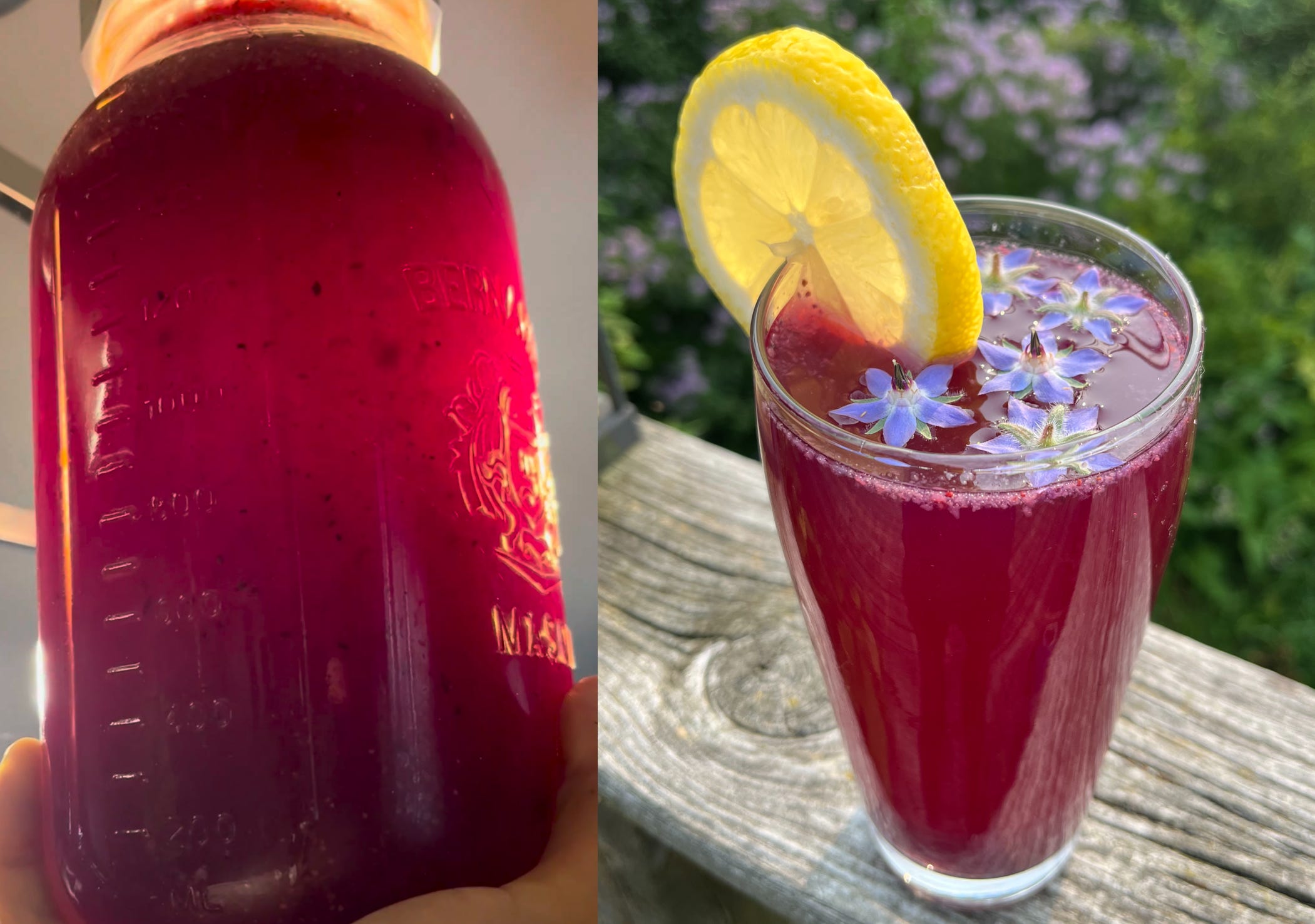
Forest Fire Extinguishing Medicinal Lemonade (aka Demulcent Deluge)
This is the 45th post in the Stacking Functions in the Garden, Food Forest and Medicine Cabinet : The Regenerative Way From Seed To Apothecary series.

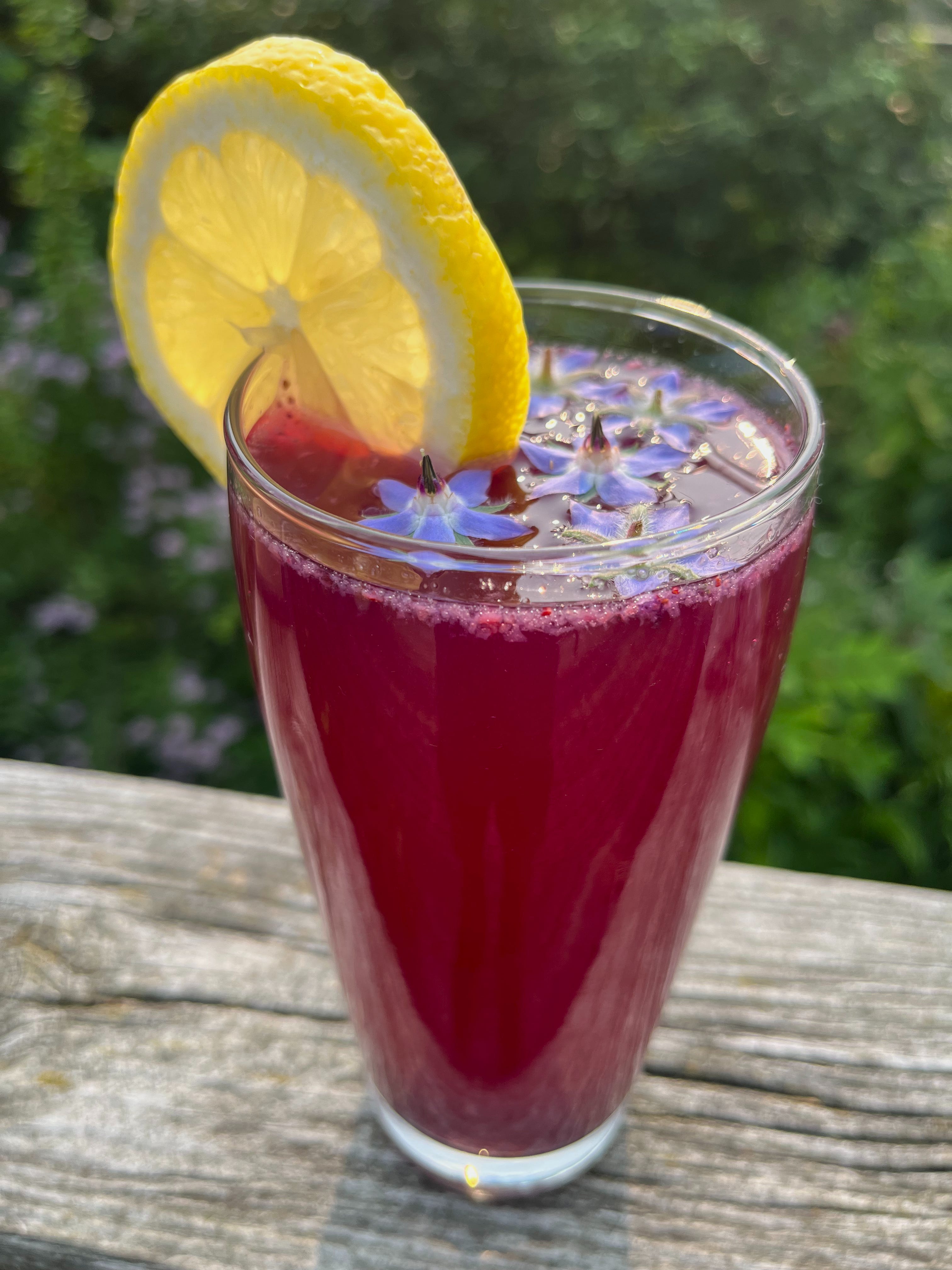
Government racketeering operations have resulted in most of northern Ontario being on fire and many other places on Earth are dealing with similar manmade unnaturally intense forest fires (no I am not talking about “global warming/climate change”) and this is resulting in many having to breath in some pretty nasty contaminated air.
However, this Newsletter is not just about pointing at problems, it is focused on finding solutions gifted to us by the living Earth. Thus, I went to work looking in my apothecary and garden for a way to turn these lemony smoky times into some delicious potent medicinal lemonade.
Many of us work outside all day and we do not have a choice to hide inside where there are air filters (and some of us do not like wearing microplastic laced facemasks either) so I experimented to make an adaptogenic medicinal lemonade that is specially formulated to mitigate the damage caused by inhaling forest fire smoke and protect the airways.
I ended up making three different batches to experiment with different combinations to find the right balance and feel how much it was helping me while working outside on the smokey days.
The first batch contained 4 types of berries (strawberries, blueberries, elderberries and five flavor berries), freshly harvested Aloe Vera gel, Blue Butterfly Pea blossoms, Rhodiola rosea (golden root), Marshmallow root, Nettle, Echinacea root, ginger, organic lemon and lime juice, and a touch of maple sugar. It was exquisitely delicious and helped quite a bit when I was working hard outside all day.
In reality I formulated this beverage to contain to many synergistically medicinal ingredients that it offers a wide range of health benefits beyond just protecting the air ways against forest fire smoke.
This lemonade is not only delicious, refreshing and helps relieve the discomfort and mitigate the deleterious health impacts of forest fire smoke it also offers radioprotective, hepatoprotective, anti-allergen, cognitive function enhancing, anti-aging, anticancer, Ocular-Regenerative and Ocular-Protective, platelet aggregation suppression, Osteoprotective and Osteoregenerative, cardioprotective, anti-tussive, tumor suppressing, neuroprotective and mitochondrial health optimizing benefits (as well as being packed full of antioxidants).
Essentially, this lemonade makes you ready to kick ass and take names in general.
The second batch I also added some Ginseng ( dried Linden Flowers and basil seeds (for increasing the Demulcent content to protect the mucus membranes) and that helped me breath even easier the next day and still tasted good, but not as amazing as the first batch.
Lastly, I added all of the above plus dried mullein, peppermint, chrysanthemums, oregano and holy basil. I felt amazing sipping on that today, though the taste (while not unpleasant) was unusual and so it was more of a swig it and feel great but not a sipping for pure flavor joy experience.
Ingredients:
½ cup (100g) organic raw honey, or maple or coconut sugar (dissolved into ½ cup water)
1 cup freshly-squeezed lemon juice (from about 5-7 lemons)
1/2 cup freshly squeezed lime Juice
6 cups cold spring water (I use Fiji water that I run though a filter to remove microplastics but allows the Silicic Acid to remain intact to detox aluminum from the body while also protecting against forest fire smoke)
1/2 - 1 cup blueberries (or other anthocyanin rich berries)
1/2 cup strawberries
a handful or two of dried elderberries
1 - 2 tablespoons dried Five Flavor Berries, aka Schisandra chinensis (aka “five flavor fruit”)
1 - 2 tablespoons dried echinacea root (or a few tea bags containing it)
1/4 - 1/3 cup freshly harvested aloe vera gel
2 tablespoons dried marshmallow root (and/or dried Linden flowers)
1/4 cup dried Blue Butterfly Pea blossoms (Clitoria ternatea)
2 tablespoons dried Rhodiola rosea (golden root)
a handful or two of dried nettle leaves
a piece of ginger rhizome at least as big as your thumb (thinly sliced)
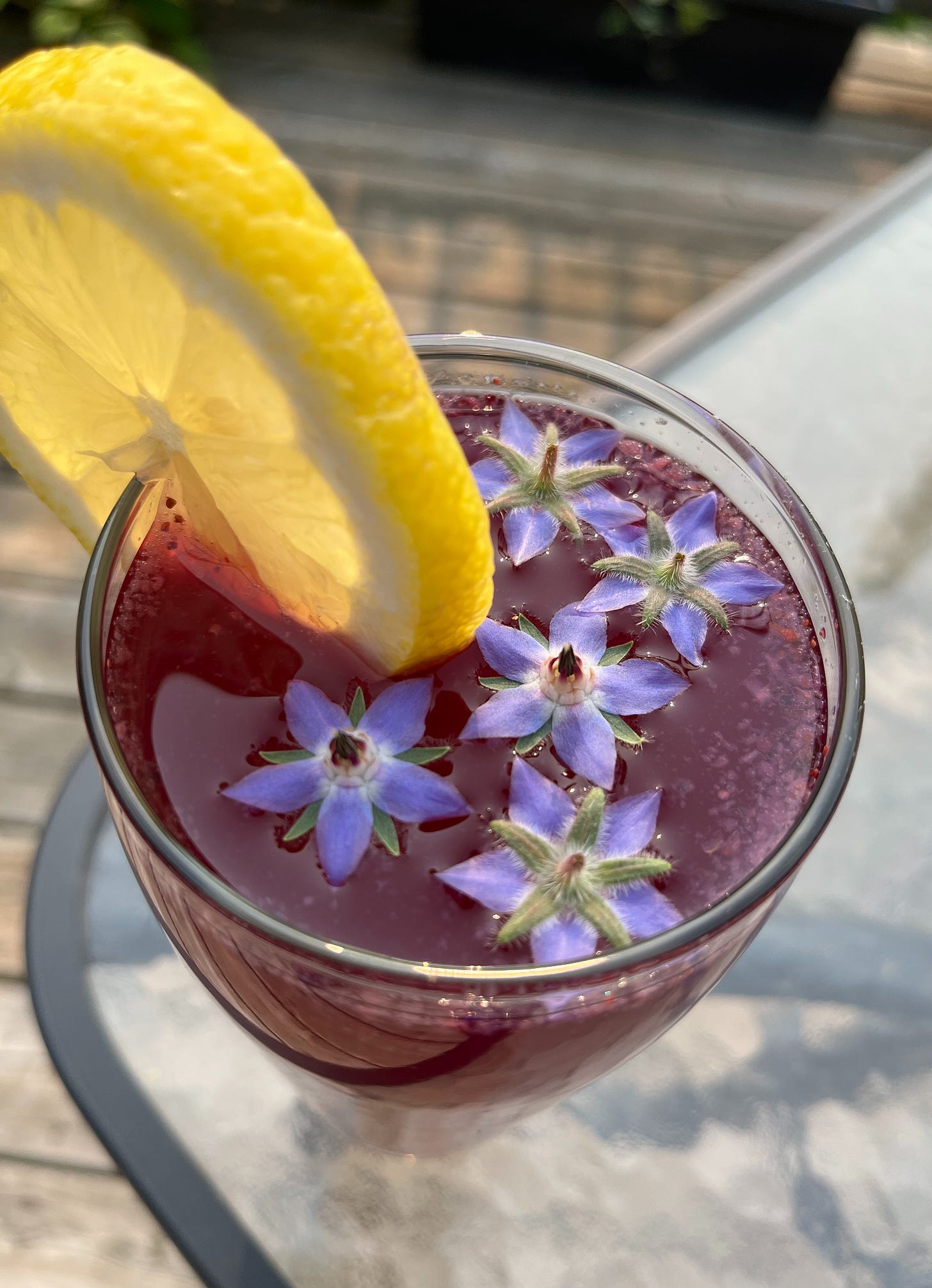
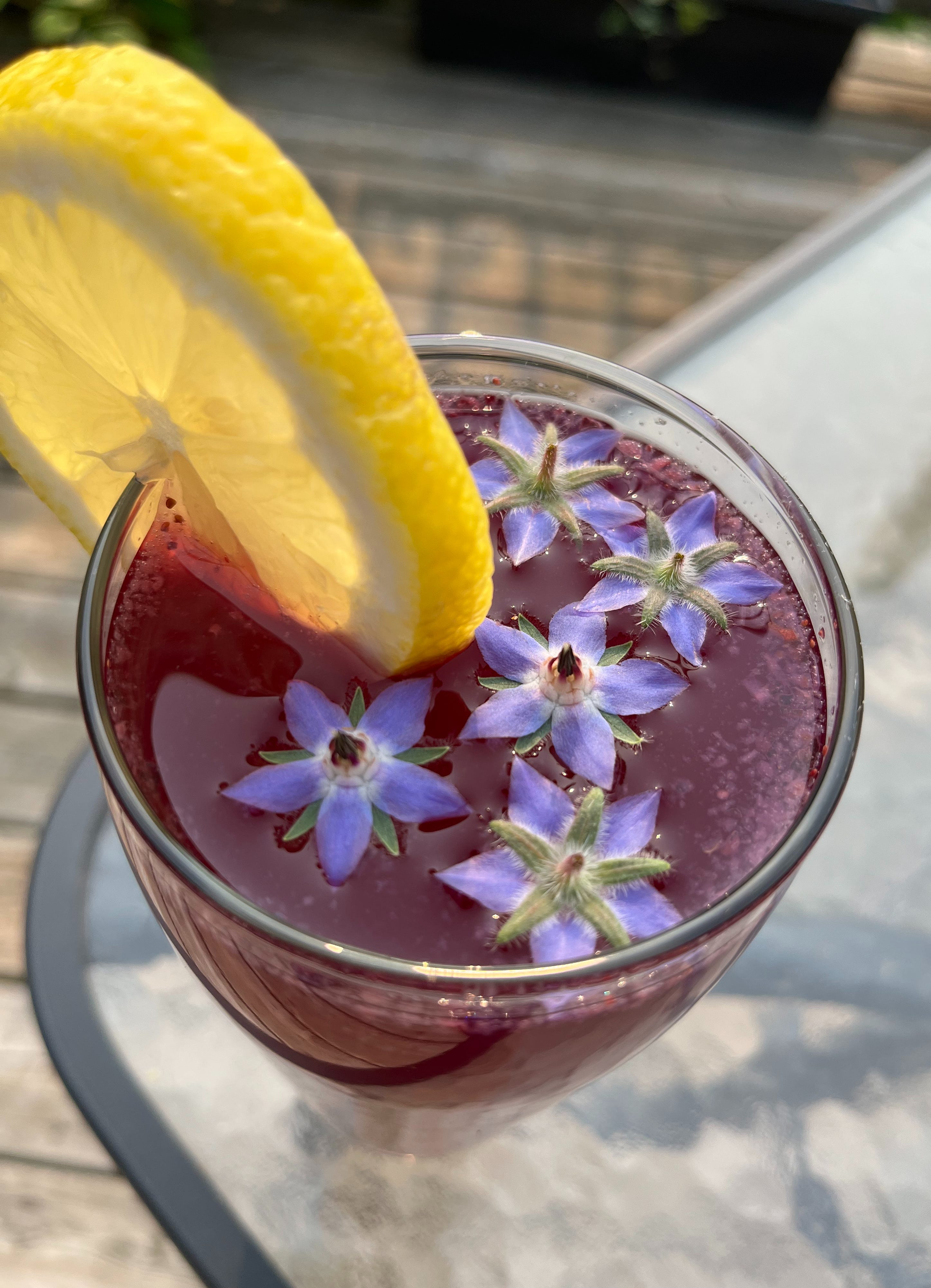
Borage blossoms for garnish
Optional Ingredients for added medicinal potency:
Ginseng
1 tablespoon or two of Basil seeds (hydrated to release gel for demulcent effect)
Mullein (run the decoction of this dried herb through a coffee filter to remove small hairs before adding to lemonade mixture)
Peppermint
Chrysanthemums
Oregano
Thyme
Holy Basil / Tulsi
Goji Berries
Chai Seeds
Instructions:
The night before use a couple cups of water to make a herbal decoction with the dried herbs and ginger.
That involves bringing the water to boil and then adding the echinacea root, nettle, butterfly blue pea blossoms, Rhodiola rosea (golden root), marshmallow root, Schisandra chinensis (aka “five flavor fruit”), elderberries, ginger and any dried ingredients from the optional list above) and removing from heat, covering and allowing that to sit and infuse for at least 20 min (I do an hour). Then strain out and compost the solids and put the decoction in fridge to cool overnight.
The next morning, heat up 1/2 cup of the water and dissolve your organic sugar then remove from heat. Juice your lemons and limes (rolling them on the counter first lets you get more juice out of them).
Next add the aloe vera gel and fresh berries to the blender and use the half cup of sugar water to help with emulsification. Once blended smooth pour into your lemonade vessel (I used a large mason jar). Add the citrus juice, decoction from fridge and the remaining water. Once you have about 2 liters (8 cups) taste and see if you want to add more of anything.
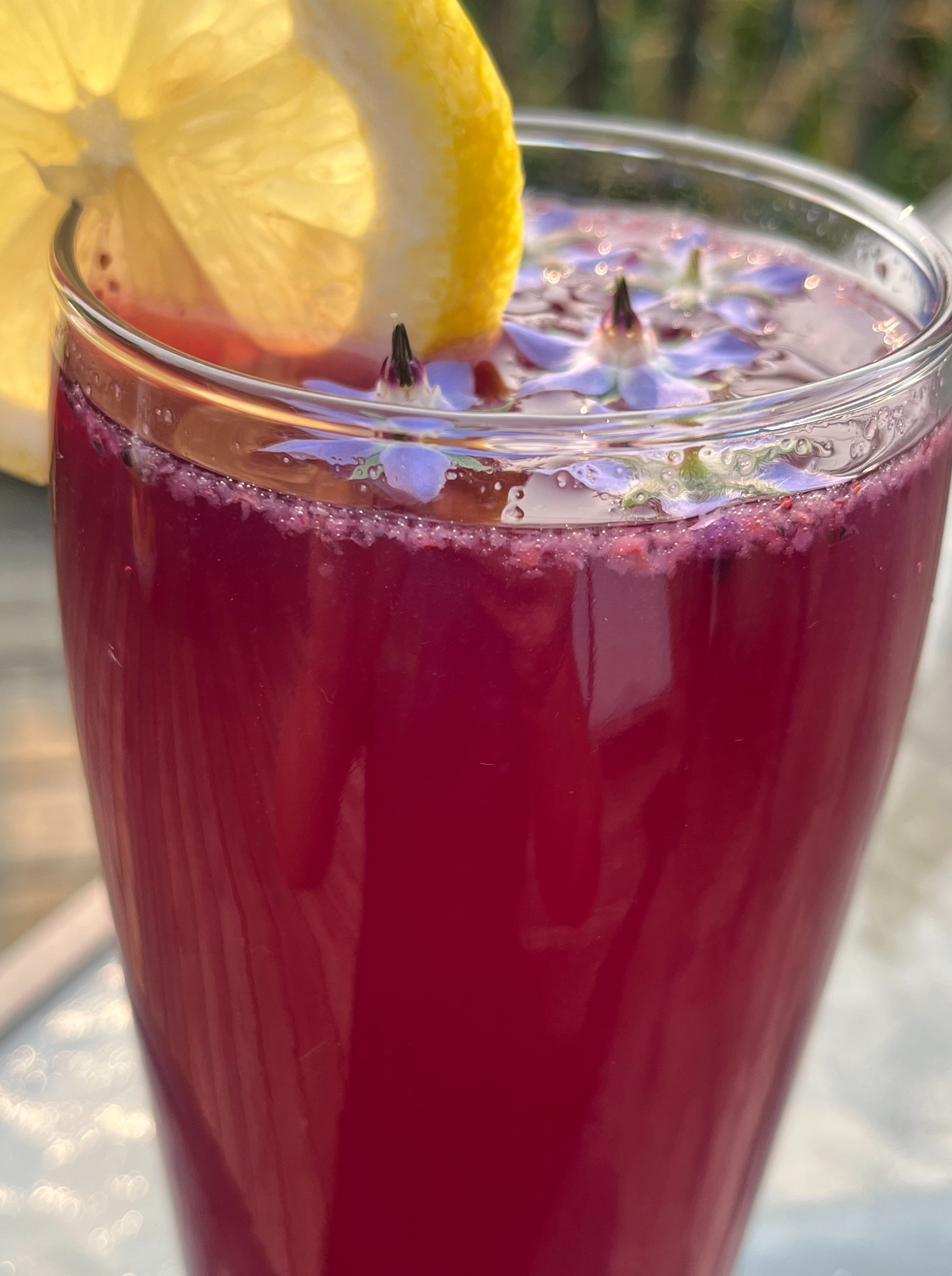
It should be potent and more of a concentrate strength than drinkable at that stage. I found that adding equal volume cold spring water or ice to the lemonade mixture resulted in a lovely beverage. Drinking it full strength is great too, but it can be spread out for more hydration by adding some water or ice to your personal taste level before enjoying.
(It stores in fridge for up to a week and retains excellent quality if in an air tight container)
I hope you will try making your own version and let me know how it goes!
Some info on the ingredients I chose and why :
Strawberries, blueberries and elderberries for deliciousness and antioxidants. They are packed with antioxidants called anthocyanins and vitamin C. These nutrients fight off harmful free radicals caused by breathing in toxic air and ash.
Elderberries also optimizes mitochondrial health and increase the production of adult stem cells.
Elderberries contain a number of medicinal compounds (such as anthocyanins, minerals and essential vitamins) that optimize mitochondrial function.
Mitochondria are the powerhouses of your cells, generating energy to fuel your cells’ biochemical reactions. Via optimizing their function and promoting their rates of regeneration within your body you are building a solid foundation for health, vibrancy and longevity from the cellular level up (including your lungs and heart).
Sufficient mitochondrial biogenesis (the process by which cells increase mitochondrial numbers) is necessary for efficient cell function and haemostasis, which is dependent on the regulation of ATP generation and maintenance of mitochondrial DNA (mtDNA). These procedures play a primary role in the processes of inflammation, aging, cancer, metabolic diseases, and neurodegeneration. Polyphenols (such as anthocyanins) are considered as the main components of plants, fruits, and natural extracts with proven therapeutic effects during the time. These components regulate the intracellular pathways of mitochondrial biogenesis.
Schisandra Berry or Schisandra chinensis (aka Five Flavor Fruit):
Helps your body cope with forest fire smoke. Its high levels of antioxidants protect cells from damage caused by breathing in dirty air. The herb also supports your liver and immune system as they work hard to filter out toxins.
This adaptogen is also known to promote peak performance and vitality, helping the body manage stress and boost endurance.
Golden Root (Rhodiola Rosea and Rhodiola integrifolia) :
helps the body cope with forest fire smoke by acting as an adaptogen, which is a herb that reduces stress and fatigue. It supports your nervous system, fights cellular inflammation from inhaled particles, and improves oxygen utilization.
Blue Butterfly Pea blossoms (Clitoria ternatea)
Forest fire smoke floods the lungs with free radicals. The vibrant blue color of the flower comes from ternatins (anthocyanins), which are potent antioxidants. These antioxidants help neutralize free radicals and protect cells from smoke-induced oxidative damage. The blossoms contain anti-inflammatory compounds like quercetin and p-coumaric acid. This can help soothe the generalized, systemic inflammation triggered by breathing in fine particulate matter (PM2.5).
Tulsi/Holy Basil (Ocimum sanctum or tenuiflorum)–a relaxing expectorant, but also relaxes the nervous system and is an adaptogen (helps the body adapt to physical, environmental, and mental stress).
Peppermint (Mentha piperita):
The menthol content and aroma have been shown to potentially improve respiratory function by relaxing bronchial muscles, allowing for better oxygen flow, which can delay fatigue and improve stamina.
Nettle leaf - Nettle is a well rounded and nutritious herb that is not only high in minerals, but it has also been known for aiding with conditions like asthma, bronchitis, chronic coughs and mucous related infections in the lungs.
Marshmallow Root - Marshmallow root is a true friend to the lungs, especially during times of coughing, infection, and respiratory inflammation. Marshmallow has a high content of mucilage, which is a soothing, moisturizing substance contained within the herb. Marshmallow is known as a demulcent herb, which means that it soothes and protects irritated tissue. The roots contain more mucilage than the leave and are excellent for soothing and moisturizing an inflamed, irritated respiratory system.
Mullein - The ancient Greeks recognized the value of Mullein for lung health some 2,000 years ago. The dried leaves were traditionally used as a tea supporting pulmonary and respiratory function. Mullein is one of the top tonic respiratory herbs (meaning you can take it long-term for respiratory support) and is both a demulcent and expectorant. It's particularly beneficial for the upper respiratory tract and has been used for asthma and dry or spastic coughs for hundreds of years.
Oregano - Oregano contains carvacrol and rosmarinic acid, both of which are believed to be natural decongestants and antihistamines. Because of this, Oregano is thought to be able to help maintain healthy lung function. Recent research also shows that this herb contains volatile oils that work together to support your body’s natural resistance to harmful foreign substances that can lead to respiratory issues.
Chrysanthemum - in Chinese medicine, practitioners for thousands of years have relied on chrysanthemum explicitly for approaches towards mitigating respiratory ailments.
Other ideas for additional ingredients I have not tried yet:
Dandelion leaf (Taraxacum officinale) or Burdock root (Arctium lappa) – both of these herbs are alterative, meaning that support clearing of waste and toxins from our bodies. These herbs help clear the lymph and blood using the liver and urinary system to eliminate toxins, of which inhaled smoke is one.
Thyme (Thymus vulgaris)– a relaxing expectorant that can help loosen mucus and move it up and out- but relaxes the bronchials too (helps reduce coughs and spasms).
Slippery Elm Bark - Slippery elm has a long history of being used for relieving symptoms from coughs and other respiratory ailments like asthma and bronchitis. It is believe to be an antitussive (used to prevent or relieve a cough
Anti-inflammatory ingredient ideas:
Inflammation is one of the first reactions to damaged tissue caused by particulate inhalation. Anti-inflammatories can reduce some of the immediate and long-term health issues caused by inflammation.
Black birch
Chamomile
Licorice
Turmeric
Willow
Wintergreen
Many mint family plants (Lamiaceae) are aromatic and adaptive to various purposes, such as easing tension, opening stuck nasal passages, and soothing inflamed respiration.
Mint family expectorants to help move gunk out of the throat:
Rosemary leaves (Rosmarinus officinalis)
Sage leaves (Salvia spp.)
Horehound leaves (Marrubium vulgare)
Mint family nervines for soothing stress:
Skullcap leaves (Scutellaria spp.)
Lemon balm leaves (Melissa officinalis)
Lavender flowers (Lavandula spp.)
Other nervines to reduce stress:
Oat tops (Avena sativa, Poaceae)
Chamomile flowers (Matricaria chamomilla, Asteraceae)
Rose petals/buds (Rosa spp., Rosaceae)
Passionflower leaves (Passiflora spp., Passifloraceae)
Mallow family (Malvaceae) Demulcents
These can help soothe parched mucous membranes like dry skin, throat, or nose. Prepare as a cold infusion, perhaps with a little squeeze of lemon or another citrus, and some honey or maple syrup.
Linden leaves (Tilia spp., Malvaceae)
Hibiscus flowers (Hibiscus spp., Malvaceae)
Corrigent demulcents that can help unify and flavor formulas
Licorice root (Glycyrrhiza glabra, Fabaceae)
Cinnamon bark (Cinnamomum spp., Lauraceae)
For more ideas on formulating beverages to protect against and sooth/heal the damage caused by forest fire smoke exposure, read the article below:
Medicinal Teas - Stacking Functions with Synergistic Herbs to Create Botanical Infusions That Heal and Improve Quality of Life

This post serves as the 38th post which is part of the (Stacking Functions in the Garden, Food Forest and Medicine Cabinet : The Regenerative Way From Seed To Apothecary series).
If you would like to have access to well over a hundred other fun and nutritious recipes like this, my first book was packed full of them. Here is info on where you can purchase either a physical or digital copy of my first book below.

For those interested in purchasing a physical copy of the book you can do so through this link:
https://recipesforreciprocity.com/shop/softcover/
Great idea!
Thank you! I will share it with my friends who are suffering from the "canadian smokes!